Architectural Impact
Unlike table lamps, which require supporting furniture, floor lamps stand independently. This autonomy allows them to function as sculptural elements within a room. They can fill empty corners, visually raise the ceiling height through vertical lines, and create defined zones in large open-plan living areas.
Because they occupy floor space, selecting a floor lamp involves balancing the size of its base footprint against the available area, ensuring it doesn't become a trip hazard or crowd other furniture. The scale must be carefully considered; a massive arc lamp demands breathing room, while a slender reading lamp can slide effortlessly behind an armchair.
Primary Types of Floor Lamps
Floor lamps generally fall into three functional categories, each serving a distinct purpose in your interior lighting scheme:
- The Torchiere: Featuring a bowl-shaped shade that directs light upward, torchieres bounce light off the ceiling. This provides indirect, diffuse ambient light that can effectively substitute for overhead lighting in rooms lacking ceiling fixtures. They excel in tight corners where verticality is needed.
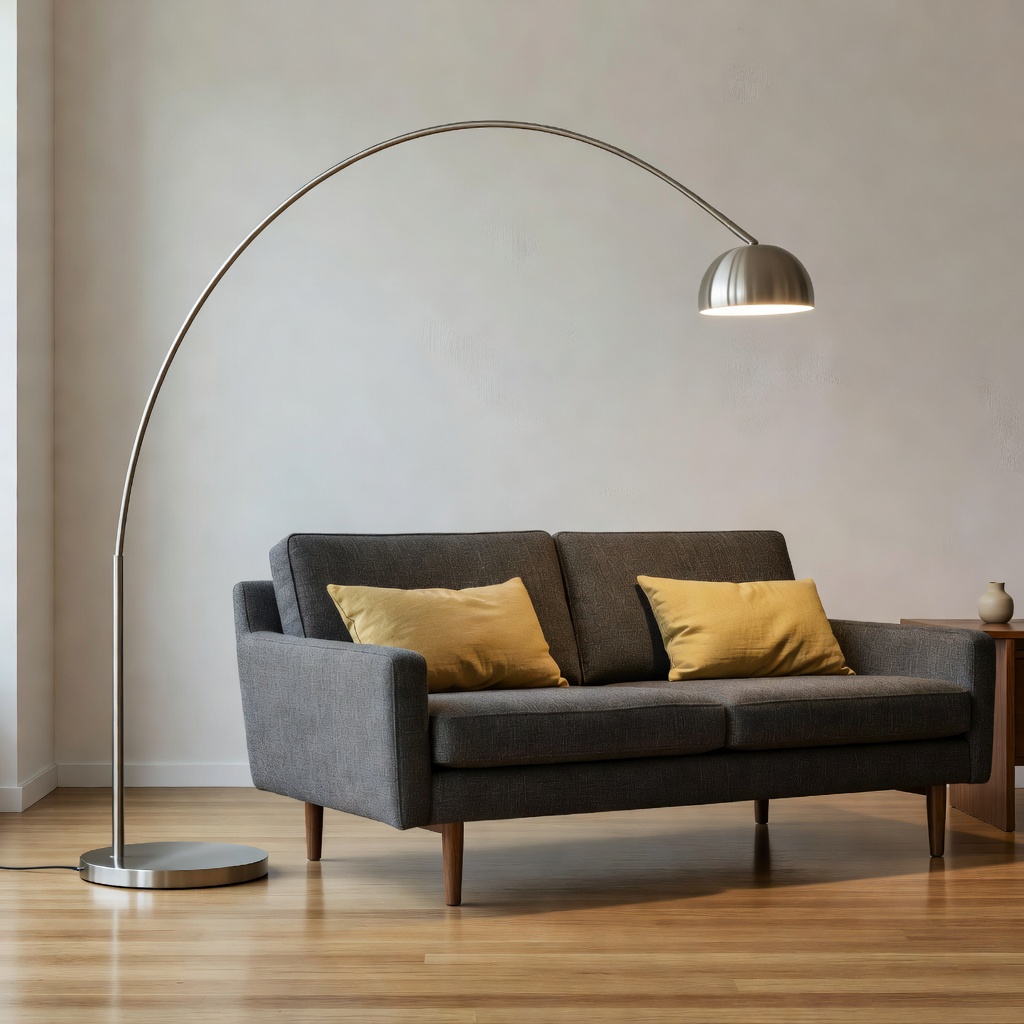
- The Arc Lamp: Characterized by a heavy base and a long, sweeping curved arm, arc lamps are designed to cast light directly over a seating area or dining table without requiring overhead hardwiring. They are dramatic statement pieces but require significant ceiling height and floor space to look proportionate.
- The Reading/Task Lamp: Typically featuring an adjustable arm and a focused shade (like an apothecary or pharmacy lamp), these direct a concentrated beam of light downwards. They are best placed slightly behind and to the side of a reading chair to illuminate a book without casting a shadow from the reader's head.
Positioning Strategies
Placement is critical. For ambient floor lamps, placing them in corners allows the light to wash out along two walls, maximizing the reflective surface and making the room feel larger. When positioning a task floor lamp near a chair or sofa, place it on the side of the user's non-dominant hand (if possible) to minimize shadows when reading or writing.
Arc lamps should have their heavy bases tucked safely behind a sofa or sectional, allowing only the elegant curve and the shade to hover over the seating area. Be mindful of traffic flow; the lowest point of the shade should be high enough that people won't bump their heads when standing up from the sofa.
Stability and Safety Considerations
Because they are tall and freestanding, floor lamps can be top-heavy. When selecting a lamp, especially in households with children or pets, evaluate the weight and width of the base. Solid marble, cast iron, or heavily weighted steel bases are vastly superior to hollow metal bases. Furthermore, check the routing of the power cord; cords that exit from the very bottom of the base are less of a tripping hazard than those that drop from the socket assembly halfway up the pole.
Layering with Floor Lamps
A single floor lamp rarely provides enough light for an entire room. They are best utilized as part of a layered approach. Pair a bright torchiere in one corner with two lower-wattage table lamps on the opposite side of the room. This cross-illumination eliminates harsh shadows and creates a dynamic, visually interesting space that feels professionally designed.