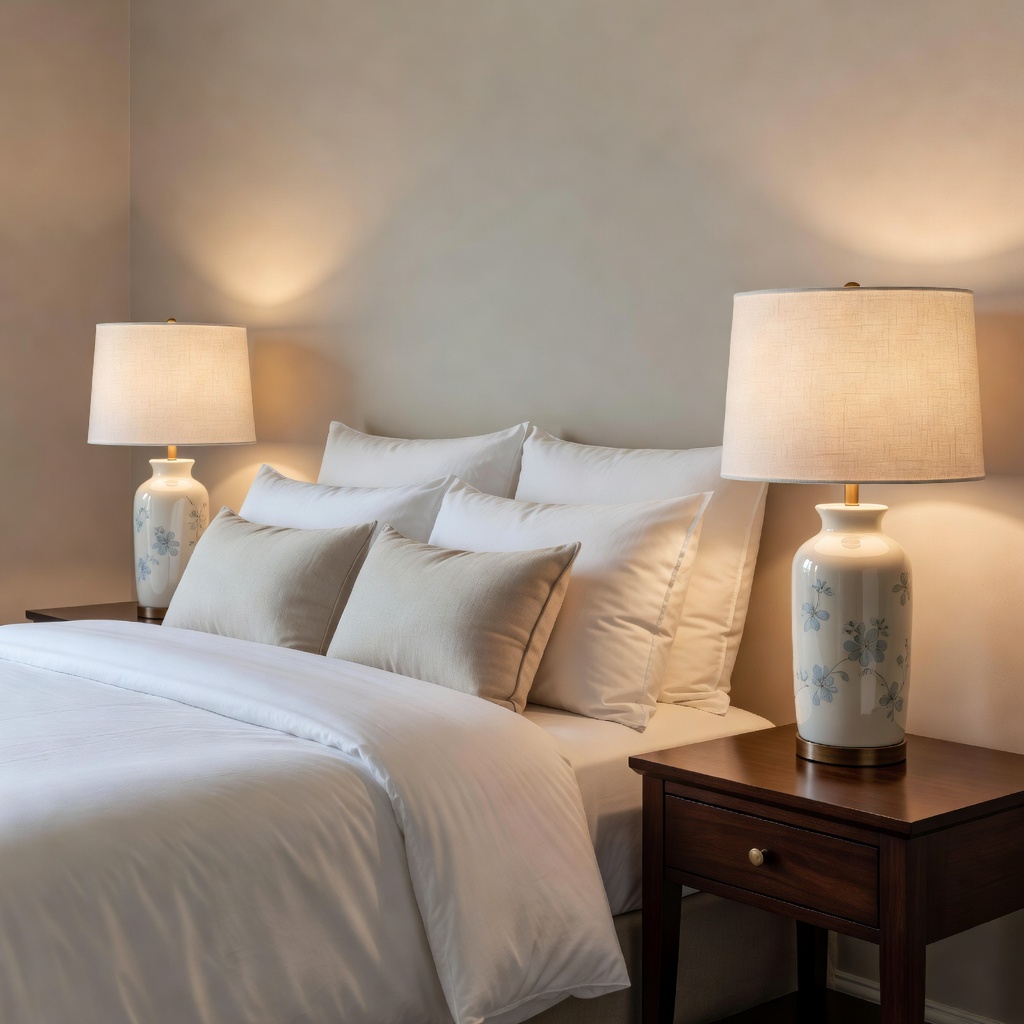
The Role of Table Lamps in Layered Lighting
In the discipline of interior design, a well-lit room relies on layered lighting: ambient (general), task (specific), and accent (decorative). Table lamps primarily bridge the gap between ambient and task lighting. They bring the light source down to human height, creating localized pools of warmth that soften the harsh overhead glare typical of central ceiling fixtures.
When selecting a table lamp, the design of both the base and the shade dictates its function. An opaque, dark-colored drum shade will force light strictly upwards and downwards, creating a dramatic pillar of light ideal for accenting a specific corner or providing strict reading light without disturbing the rest of the room. Conversely, a semi-translucent linen or paper shade diffuses the light outward in 360 degrees, providing a gentle, ambient glow that elevates the overall brightness of the space.
Sizing and Proportion Criteria
Proportion is frequently where lighting plans fail. A lamp that is too small for a large console table will look disjointed, while an oversized lamp on a delicate bedside table will overwhelm the space and potentially cause glare if the bulb is visible beneath the shade.
As a general rule for living rooms, a table lamp should ideally stand between 24 to 34 inches tall to ensure the bottom of the shade sits at eye level when you are seated. This prevents the bare bulb from shining directly into your eyes. For bedside tables, standard measurements dictate that the lamp should be roughly one-third the width of the nightstand, and the bottom of the shade should be approximately 20 inches above the mattress height.
Material Selection and Aesthetics
The materials you choose for your table lamp base contribute significantly to the textural language of your room. Ceramic and terracotta bases lend an earthy, grounding weight to a space, often appearing handcrafted and artisanal. They pair beautifully with soft, organic interiors.
Metal bases—whether brushed brass, matte black steel, or polished nickel—offer a sleeker, more tailored appearance. They reflect light and can add a subtle glint to a dark corner. Glass or acrylic bases are excellent for smaller rooms; their transparency prevents the lamp from adding visual bulk, maintaining an airy, unobstructed feel.
Pros and Cons of Common Lamp Shades
The shade is the functional heart of the table lamp, acting as a filter for the raw light source.
- Linen Drum Shades: Excellent for general ambient light. They disperse a soft, even glow. However, they can collect dust easily and may require regular vacuuming with an upholstery attachment.
- Metal Dome Shades: Popular in mid-century modern and industrial styles. They block all horizontal light, pushing it purely downwards. Great for focused reading, but poor for illuminating a whole room.
- Pleated Silk: Traditional and elegant. They create beautiful shadow play, but lean heavily into classic or maximalist aesthetics, making them difficult to integrate into ultra-modern spaces.
Bulb Considerations
Regardless of how beautiful the table lamp is, the wrong bulb will ruin its effect. For residential table lamps intended for evening use, we strongly advocate for LED bulbs with a color temperature of 2700K to 3000K. This spectrum mimics the warm, amber glow of traditional incandescent bulbs or candlelight, signaling to the brain that it is time to wind down. Additionally, ensuring your lamp base and chosen LED bulb are dimmable provides the ultimate flexibility, allowing the fixture to transition from afternoon reading light to late-night ambient glow.