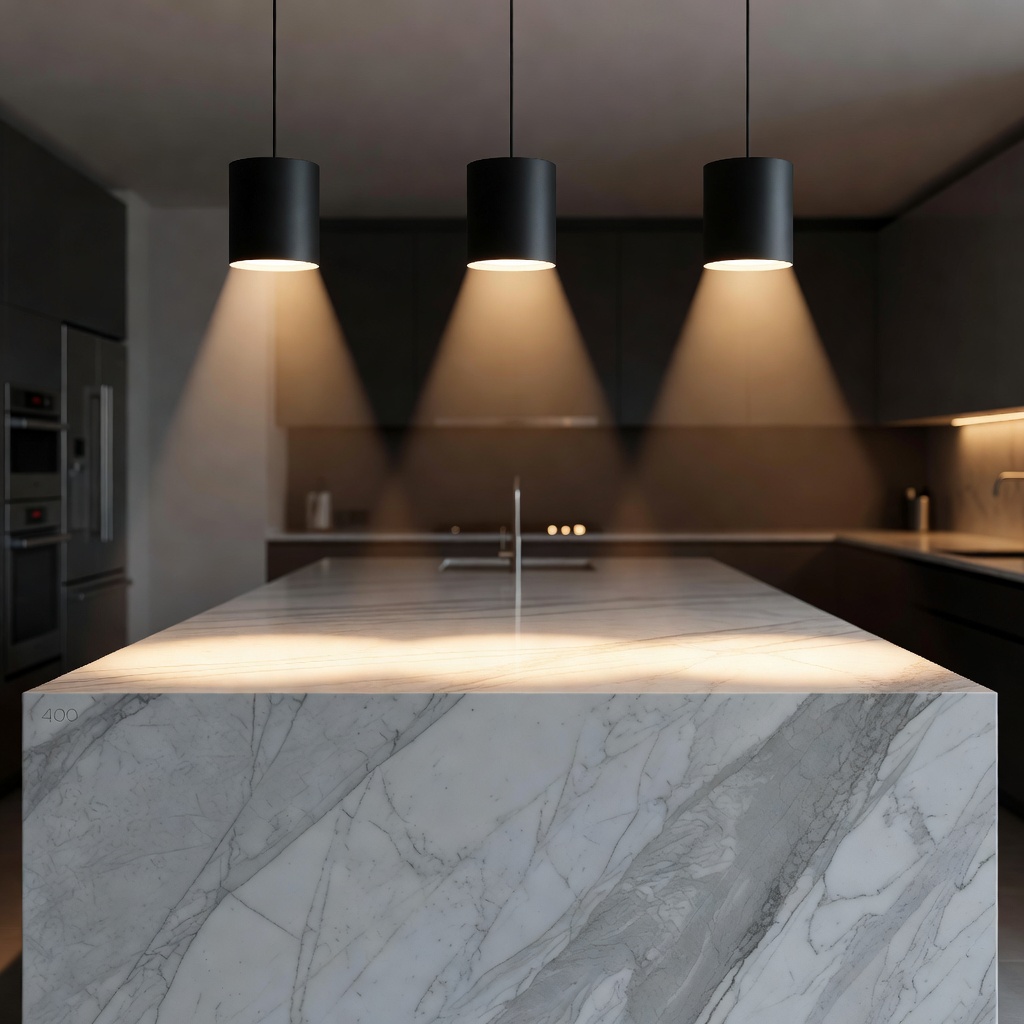
Defining Spaces with Light
In modern, open-concept homes, defining distinct functional zones can be challenging without walls. Pendant lights serve as brilliant architectural tools in this regard. By dropping a light source down from the ceiling, you visually anchor the space beneath it. A row of pendants instantly defines a kitchen island as a gathering spot, while a singular, large-scale pendant cordons off a dining table, creating a room within a room.
Pendants are suspended by a cord, chain, or metal rod, and they offer vast stylistic diversity, ranging from minimalist glass globes to woven rattan baskets and heavy industrial metal domes.
The Rules of Spacing and Grouping
When hanging multiple pendants—such as over a kitchen island—designers frequently rely on the "Rule of Three." Odd numbers create visual balance and prevent the arrangement from looking overly rigid or symmetrical.
Spacing is mathematical. Measure the length of your island or table. The distance between each pendant should be equal, and there should be a margin at each end. A standard rule of thumb is to leave at least 6 inches of clearance from the edge of the island to the edge of the outermost pendants. The distance between the pendants themselves should typically be roughly the diameter of one pendant, or between 24 to 30 inches apart from center to center.
Height Matters
Hanging a pendant too high disconnects it from the furniture it is meant to anchor; hanging it too low obscures sightlines and risks head collisions.
Over a dining table or kitchen island, the bottom rim of the pendant should generally sit between 30 and 36 inches above the surface. However, this rule must be adjusted for the height of the home's occupants. You should be able to look across the island or table to converse with someone sitting opposite you without the pendant blocking your view of their face.
Opaque vs. Translucent Shades
The material of the pendant shade dictates the direction and quality of the light.
- Opaque Shades (Metal, Ceramic, Dark Woods): These block all lateral light, creating a strong, focused cone of light downwards. They are excellent for task lighting over counters, but they will leave the upper half of the room in shadow if not supplemented by recessed ceiling lights.
- Translucent Shades (Frosted Glass, Paper, Fabric): These diffuse light softly in all directions, illuminating the ceiling and walls while still providing light to the surface below. They are ideal for creating a bright, airy, and welcoming ambient glow.
- Clear Glass: Highly popular for a minimalist aesthetic, clear glass provides zero diffusion. The light bulb itself is the visual centerpiece, meaning a vintage-style filament LED bulb is essential to prevent painful glare.
Dimmers are Mandatory
Because pendants often sit directly at eye level when standing or sitting, they must be wired to a dimmer switch. The bright, high-lumen output required for chopping vegetables on an island at 6 PM is far too harsh for enjoying a glass of wine at the same island at 10 PM. Dimming capabilities transform pendants from pure utility to mood-enhancing ambiance.